
ZHUCHENG KAITE INTELLIGENT EQUIPMENT ZHUCHENG KAITE INTELLIGENT EQUIPMENT
News
ClassifyNews
The actual effect of the vacuum chopping machine in meat filling processing
Source:本站 Time:2026/1/22 14:32:16 frequency:
1、 Working principle and technical characteristics of vacuum chopper
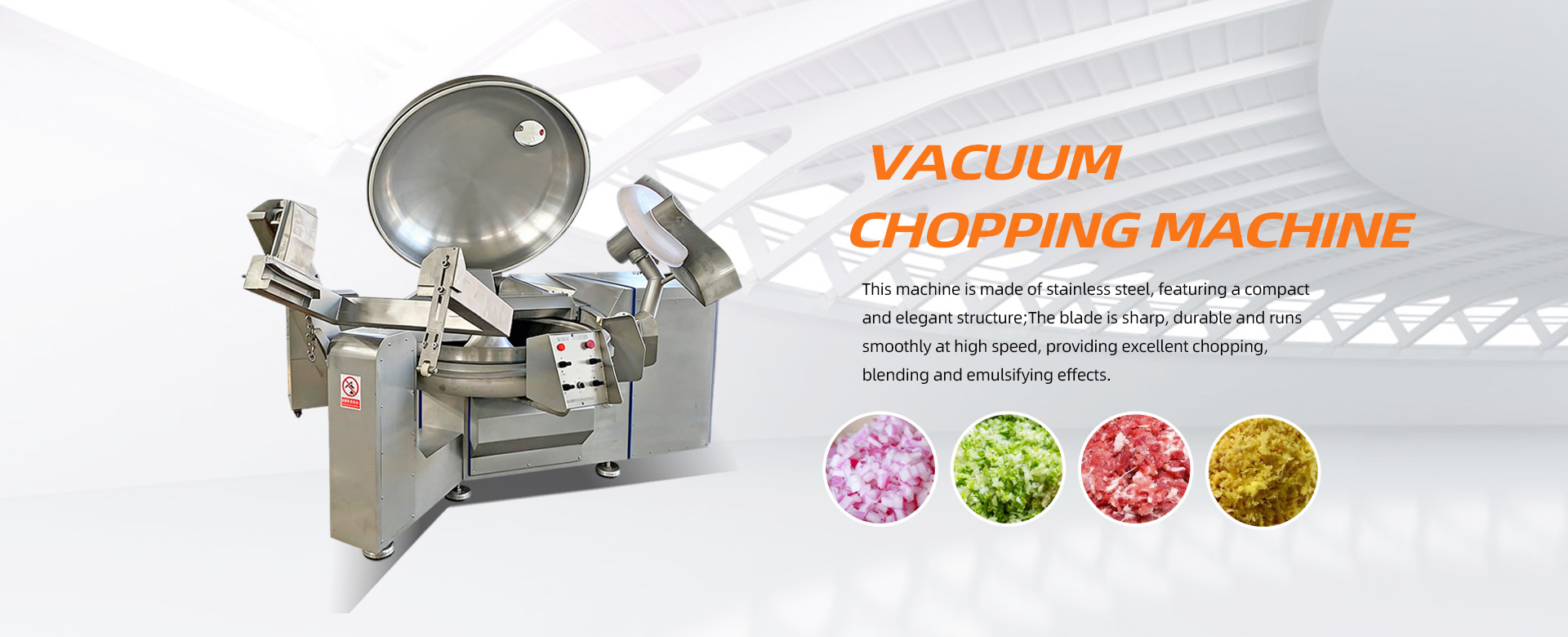
The vacuum chopper is a core equipment in modern meat processing. Its working principle is to cut, stir, and emulsify raw meat through high-speed rotating blades, while completing this process in a vacuum environment. This type of equipment usually consists of main components such as a chopping pot, a knife set, a vacuum system, a refrigeration system, and a control system, which can achieve fine processing of meat filling.
Compared with traditional open cutting and mixing machines, vacuum cutting and mixing machines have several significant technical features: firstly, the vacuum environment can effectively prevent air from mixing into the meat filling and reduce oxidation reactions; Secondly, meat protein is easier to extract under vacuum conditions, which improves emulsification efficiency; Again, vacuum chopping can control the temperature and avoid overheating affecting the meat quality; Vacuum treatment helps to eliminate bubbles in meat filling and improve product density.
From the perspective of equipment structure, vacuum chopper usually adopts a double-layer stainless steel pot body design, with cold water circulating in the middle for cooling; The number of blades is usually 3-6, arranged at different angles to ensure even cutting and mixing; The vacuum system can maintain a stable vacuum degree of 0.08-0.095MPa; Some models are also equipped with automatic cleaning systems and intelligent control panels to set and record processing parameters.
2、 The effect of vacuum chopping on improving the quality of meat filling
1. Improvement of texture characteristics
The vacuum chopping technique has a significant improvement effect on the texture characteristics of meat filling. Meat filling processed in a vacuum environment has better elasticity, cohesiveness, and chewiness than products cut and mixed under normal pressure. Experimental data shows that the elastic modulus of vacuum chopped meat can be increased by 15-20%, mainly due to the sufficient extraction and cross-linking of myofibrillar protein under vacuum conditions. Therefore, the shape retention of meat fillings has been strengthened, especially suitable for meat products that need to be shaped, such as ham sausage, Rice-meat dumplings, etc.
During the chopping process, the vacuum environment avoids the formation of tiny air chambers due to the mixing of air, resulting in a denser tissue structure of the meat filling. This densification process makes the final product less prone to looseness when sliced, resulting in a more delicate texture. For emulsified sausage products, vacuum cutting can make the distribution of fat particles more uniform, avoid fat precipitation, and significantly extend the product shelf life.
2. Effective maintenance of color and flavor
Oxidation is the main factor affecting the color and flavor of meat products. The vacuum chopper significantly reduces the degree of oxidation during meat filling processing by eliminating oxygen. This means that there is less accumulation of fat oxidation products.
From a sensory evaluation perspective, vacuum chopped meat filling has a brighter color, especially for red meats such as pork and beef, which can better maintain their natural color. In terms of flavor, vacuum treatment reduces the loss of volatile flavor compounds, making the meat aroma more rich and pure. For products with added spices, a vacuum environment also facilitates the uniform distribution and retention of flavor compounds.
3. Improvement in yield and economic benefits
Vacuum cutting and mixing technology can significantly improve the water holding capacity and yield of meat filling. In a vacuum state, muscle proteins are more easily dissolved and expanded, enhancing their water absorption capacity. Practice has shown that under the same formula, vacuum chopping can increase the meat filling yield by 2-5%, which means significant economic benefits for large-scale production.
From a microstructural analysis, vacuum chopping allows muscle fiber proteins to fully stretch and form a more complete three-dimensional network structure, which can lock in more water. At the same time, the vacuum environment avoids the phenomenon of "excessive chopping" that is prone to occur during normal pressure chopping, so that the protein network will not be damaged by excessive mechanical action, thus maintaining a water holding state.
3、 Application performance of vacuum chopping and mixing in different meat products
1. Application in emulsified sausage products
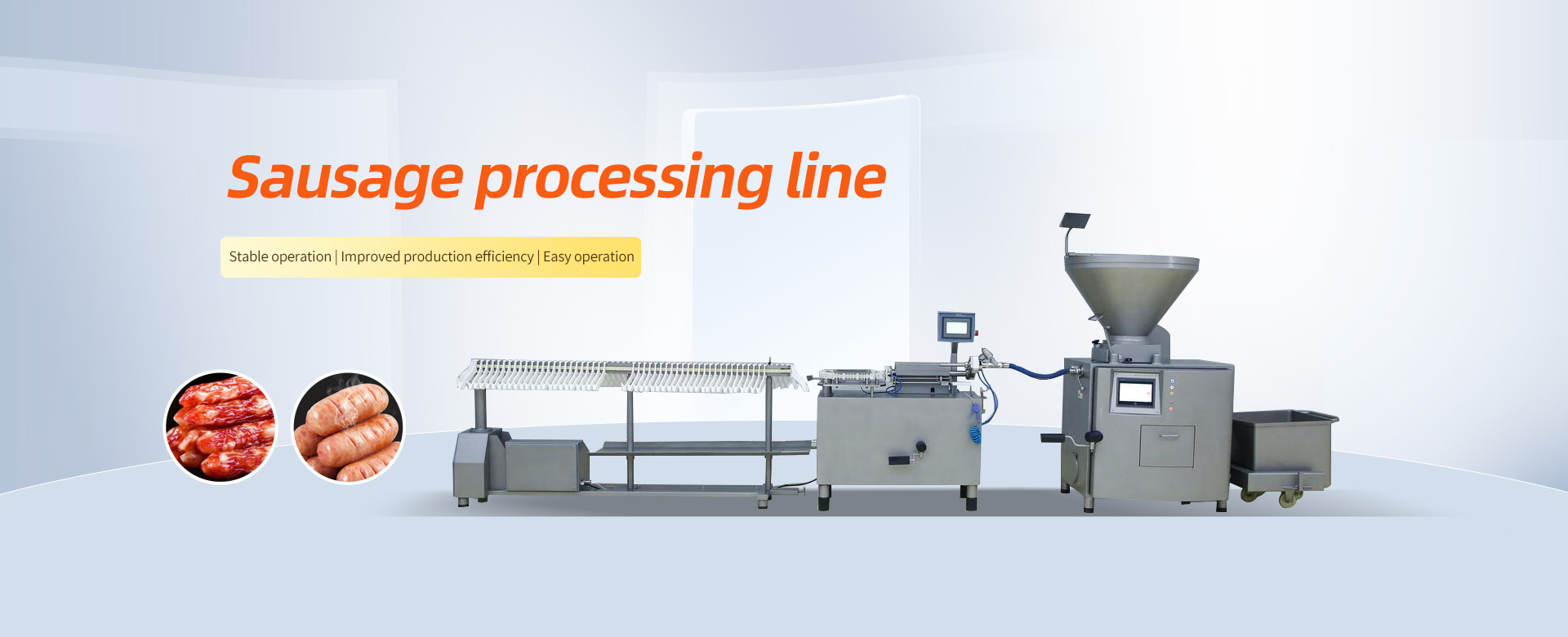
In emulsified sausages such as Frankfurt sausage and Vienna sausage, vacuum chopper demonstrates irreplaceable advantages. Cutting and mixing in a vacuum environment can form a more stable emulsion system for minced meat, and the fat particles are fully encapsulated by proteins, avoiding the phenomenon of "oil" in the product during heat treatment.
In actual production, it has been found that emulsified sausages mixed by vacuum cutting have a finer and more uniform cross-section, no obvious pores, and a smooth taste. During the hot processing, the product size stability of vacuum cutting is better, and the shrinkage rate is reduced, which is very important for maintaining product specification consistency. In addition, vacuum chopping also helps to evenly distribute seasonings and seasonings, ensuring consistent flavor in each part of the product.
2. Applicability in the processing of Chinese meat products
For traditional Chinese meat products such as Rice-meat dumplings, dumpling stuffing, steamed stuffed bun stuffing, etc., vacuum chopping and mixing also performed well. Chinese meat products usually require the meat filling to have the taste characteristics of "elasticity, tenderness, and smoothness". Vacuum chopping can fully extract salt soluble proteins from the meat, form a good gelatinous network, and achieve the ideal texture requirements.
Of particular note is that for raw meat containing a high amount of connective tissue, vacuum chopping can better break down collagen fibers, converting them into gelatin and improving the taste. When adding starch and other auxiliary materials, a vacuum environment helps to achieve uniform binding between these ingredients and meat protein, avoiding the formation of a "powdery" texture. For products that require water to be drawn, vacuum cutting and mixing can allow for more thorough absorption of moisture and prevent water seepage in the later stages.
3. Special value in the production of recombinant meat products
The role of vacuum chopper is particularly prominent in the production of recombinant meat products such as steak and chicken cutlet. Meat mince prepared by vacuum chopping has better adhesive properties, which can keep the recombinant meat intact during slicing and cooking. Vacuum treatment also reduces the bubble content in the product, making the reconstituted meat closer to the texture of real meat pieces.
Vacuum chopping technology provides an effective way to upgrade and utilize low-grade meat raw materials. By controlling the chopping time and vacuum degree reasonably, meat raw materials from different parts can be processed into evenly distributed meat filling, greatly improving the utilization rate of raw materials. Meanwhile, the vacuum environment also reduces the risk of microbial contamination during the processing, which is beneficial for product safety.
4、 Optimization direction of vacuum cutting and mixing process parameters
1. Control of vacuum degree
Vacuum degree is one of the key parameters affecting the cutting and mixing effect. Research has shown that the suitable vacuum range for meat filling processing is between -0.084 and -0.095 MPa. The vacuum degree is too low to fully eliminate the air in the meat filling; If it is too high, it may cause excessive stretching and breakage of meat fibers, affecting the texture of the product. Modern vacuum cutting and mixing machines can now achieve control and automatic adjustment of vacuum degree.
Different products also have different requirements for vacuum degree: for emulsion products with high fineness requirements, higher vacuum degree can be used; For meat filling products that require a certain degree of fiber retention, the vacuum degree can be appropriately reduced. In addition, the timing of establishing a vacuum is also important. It is generally recommended to establish a vacuum after initial chopping to avoid splashing of meat pieces in the early stages.
2. Scientificity of temperature management
Temperature control is another key point in the vacuum cutting and mixing process. Although the vacuum environment reduces the heat generated by oxidation, high-speed chopping still leads to an increase in meat temperature. The ideal final temperature for chopping and mixing should be controlled below 12 ℃. Exceeding 16 ℃ may cause protein denaturation and affect product quality.
Vacuum chopper is usually equipped with a refrigeration system, which controls temperature through two methods: interlayer cooling and direct injection of ice water. In terms of process optimization, an intermittent chopping strategy can be adopted, which is a cyclic mode of chopping, pausing cooling, and then chopping again. For high-fat formulas, it is even more important to strictly control the temperature to avoid the melting of fat affecting the emulsification effect.
3. Reasonable matching of time and speed
The cutting time and blade speed directly affect the fineness of meat filling and the degree of protein extraction. Usually, the vacuum cutting time is 20-30% shorter than atmospheric cutting because proteins are more easily dissolved under vacuum conditions. In terms of blade speed selection, a strategy of low speed first and then high speed is generally adopted, with low speed used for meat crushing and high speed used for emulsification.
For different products, the time parameters should vary: the total chopping time for sausage products is generally 8-15 minutes; Rice-meat dumplings can be shortened to 5-8 minutes; Products that require the preservation of a meaty texture only take 3-5 minutes. Modern intelligent chopper can store multiple programs and automatically adjust time and speed parameters according to different products.
5、 The future development trend of vacuum cutting and mixing technology
With the continuous improvement of quality requirements in the meat processing industry, vacuum cutting and mixing technology is developing towards a more intelligent and better direction. The new generation of vacuum chopper will integrate more sensors and control systems to monitor the texture, temperature, and protein extraction degree of meat filling in real time, achieving adaptive adjustment. In terms of cleanliness and hygiene, automatic CIP cleaning system and anti cross contamination design will become standard configurations.
From the perspective of process innovation, new methods such as pulse vacuum technology, multi-stage vacuum control, and combined physical field assisted cutting are being studied, which are expected to further improve processing efficiency and product quality. Energy conservation and environmental protection are also important development directions, including technological innovations such as energy consumption optimization of vacuum systems, refrigerant substitution, and noise control.
Overall, as the core equipment of modern meat filling processing, the vacuum chopper has been widely recognized in the industry for its practical effects. Through continuous technological innovation and process optimization, vacuum chopping technology will continue to make important contributions to improving the quality of meat products, increasing processing efficiency, and reducing production costs.