
ZHUCHENG KAITE INTELLIGENT EQUIPMENT ZHUCHENG KAITE INTELLIGENT EQUIPMENT
News
ClassifyNews
Can the vacuum chopping machine enhance the elasticity of the product?
Source:本站 Time:2026/1/22 14:32:15 frequency:
The improvement effect of vacuum chopper on product elasticity
1、 Working principle of vacuum chopper
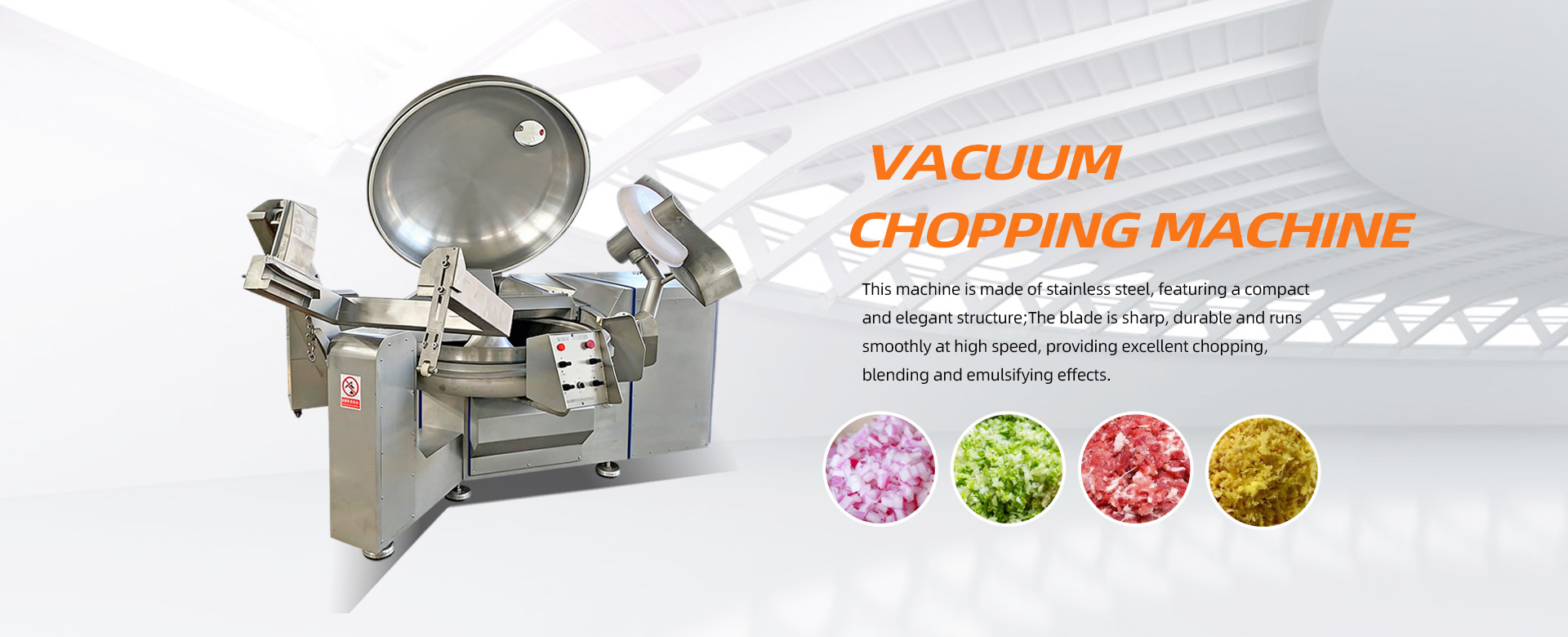
Vacuum chopper is a food processing equipment that integrates chopping, stirring, and emulsification functions. Its core feature is the ability to complete material processing in a vacuum environment. The equipment mainly consists of a chopper, a mixing blade, a vacuum system, a cooling system, and a control system. During work, the high-speed rotating chopper shatters and mixes the materials, while the vacuum pump extracts air from the container to create a negative pressure environment.
The difference between a vacuum chopper and a traditional chopper lies in its working environment. The ordinary chopper works under normal pressure, while the vacuum chopper effectively avoids air mixing into the material through vacuum treatment. This key difference directly affects the texture characteristics of the final product, especially its elasticity performance.
2、 The formation mechanism of product elasticity
Food elasticity refers to the ability of a product to return to its original state after being subjected to external forces, which mainly depends on the quality of protein network structure formation. In meat processing, myofibrillar proteins (mainly myosin and actin) dissolve and unfold under mechanical and salt dissolution, and then form a three-dimensional network structure through intermolecular interactions.
The key factors affecting elasticity include the degree of protein extraction, the emulsification state of fat, the uniformity of water distribution, and the content of bubbles. Among them, the integrity and continuity of the protein network structure play a decisive role in elasticity, and the inclusion of too many bubbles can disrupt this continuity, leading to a decrease in elasticity.
3、 The technical principle of vacuum chopper to enhance elasticity
The improvement of product elasticity in vacuum environment is mainly achieved through the following aspects:
1. Reduce the mixing of bubbles: Working under vacuum effectively avoids the mixing of air and eliminates the destructive effect of bubbles on protein networks. Bubbles, as discontinuous phases, can cleave protein networks, while vacuum treatment makes the material structure denser and significantly improves network continuity.
2. Promoting protein extraction: The vacuum environment reduces the boiling point of the material, making it easier for water to penetrate into the protein structure and promoting the dissolution of salt soluble proteins. Meanwhile, the negative pressure state makes it easier for protein molecules to unfold, exposing more active groups and facilitating the formation of a more robust network structure.
3. Improve emulsification effect: Under vacuum conditions, fat particles can be more evenly dispersed in the protein matrix, forming a stable emulsification system. This uniform distribution avoids the structural weaknesses caused by fat accumulation, resulting in a more uniform stress distribution and better elastic performance of the product when subjected to stress.
4. Optimize moisture distribution: Vacuum treatment allows moisture to be more fully absorbed and fixed by proteins, avoiding the presence of free water. Combined moisture helps to enhance the interaction forces between protein molecules, improving the water holding capacity and elasticity of the product.
4、 Verification of effectiveness in practical applications
In actual production, products processed using vacuum cutting and mixing machines exhibit significant advantages in terms of elasticity indicators. According to the texture analyzer, the elastic modulus of vacuum treated samples is usually 15-25% higher than that of atmospheric pressure treated samples, and this difference is more significant after thermal processing.
In the observation of microstructure, the protein network of vacuum treated samples presents a more continuous and uniform arrangement, and the porosity is significantly reduced. The atmospheric pressure sample shows obvious bubble voids and irregular network structures, which directly explains the reason for the difference in elasticity.
The degree of improvement varies among different product categories: for meat mince products with high protein content (such as Frankfurt sausages), the elasticity can be increased by up to 30%; For products with high fat content (such as emulsified sausages), the improvement is about 15-20%, mainly due to the improvement of fat emulsification quality.
5、 Optimization suggestions for operating parameters
To fully utilize the elasticity enhancing effect of the vacuum chopper, attention should be paid to the control of the following key parameters:
1. Vacuum degree selection: It is generally recommended to maintain it between -0.08 and -0.095MPa. A low vacuum degree (small value) cannot fully remove bubbles, while a high vacuum degree may cause excessive evaporation of water.
2. Control of cutting and mixing time: It is usually divided into two stages. In the initial stage, rough cutting and mixing (2-3 minutes) are carried out under normal pressure to allow the materials to mix preliminarily; Subsequently, initiate vacuum cutting and mixing (5-8 minutes) to ensure sufficient protein extraction and network formation.
3. Temperature management: The material temperature should be controlled below 12 ℃, as excessive temperature can cause protein denaturation. The temperature rise can be controlled by interlayer cooling or adding ice flakes.
4. Speed regulation: Generally, variable speed operation is used, with initial low-speed (1000-1500rpm) mixing and later high-speed (3000-4000rpm) emulsification. Excessive rotational speed may damage the formed protein structure.
6、 Synergistic effects with other processes
The combination of vacuum chopper and other processing technologies can further optimize product elasticity:
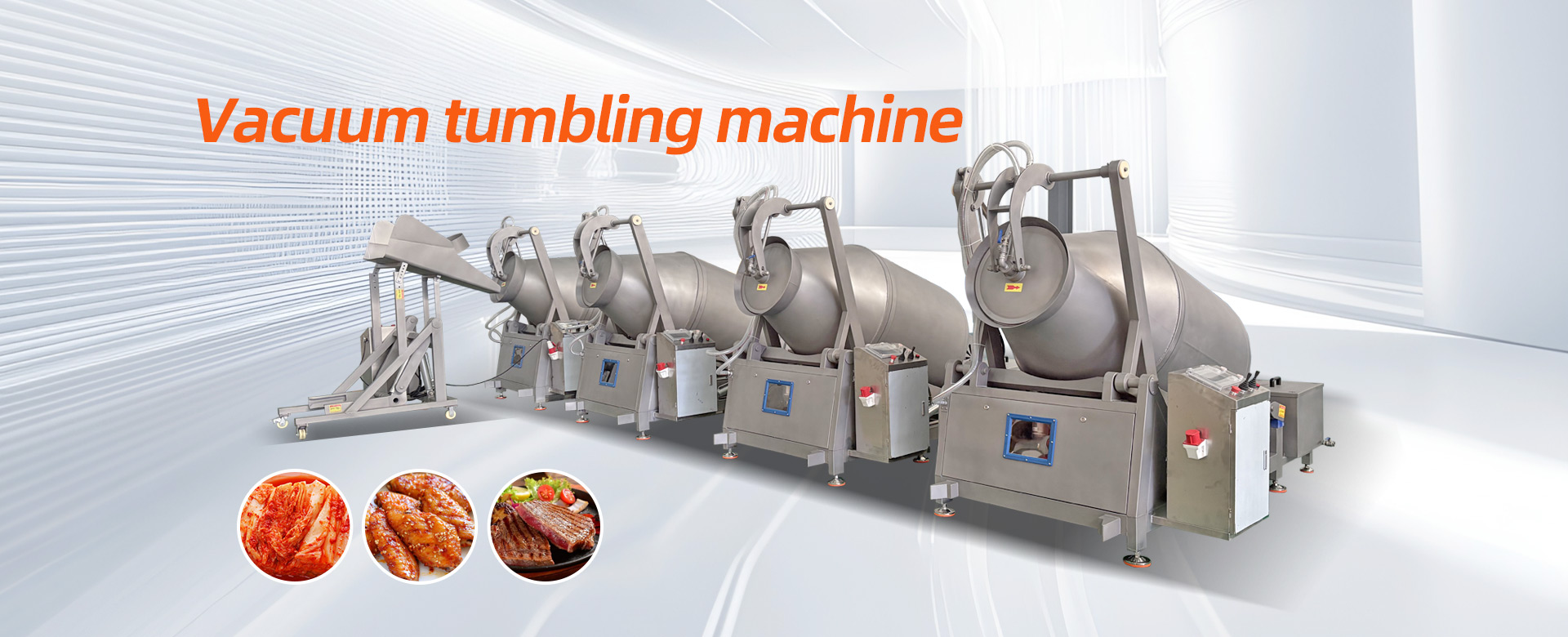
1. Combined with rolling process: First, vacuum rolling is carried out to preliminarily extract the protein, and then vacuum cutting is performed to shorten the cutting time by about 30% and improve elasticity.
2. Cooperate with the hot processing technology: the vacuum chopped product shows better heat induced gel performance in the subsequent cooking process, because the uniform structure is conducive to uniform heat transfer and full denaturation of protein.
3. Synergy with additives: Under vacuum conditions, quality improvers such as phosphates can more effectively promote protein extraction and water retention.